
Total hours: 32.5 hours per week for EYFS and KS1 / 32.75 hours a week for KS2
Parent / Carer Information
| Mrs Barker | Headteacher / DSL |
|---|---|
| Mrs Gilbert-Lock | Seahorses Class Teacher / DDSL |
| Mrs Wetton | Office Manager |
| Mrs Hinchley | Seals Class Teacher |
| Mrs Mugglestone | Seals Class Teacher |
| Miss Kettle | Turtles Class Teacher |
| Miss Cooper | Dolphins Class Teacher / SENDCo |
| Mrs Carey | Dolphins Class Teacher |
| Mrs Maynard | HLTA |
| Mrs Ellis | LSA |
| Mrs MacDonald | LSA |
| Mrs Thornton | LSA |
| 8:45am | Gates open for children to enter classrooms (all children must arrive before the gates close) |
|---|---|
| 8:50am | Gates close and welcome/handwriting/spelling practice begins |
| 9:05am | Assembly |
| 9:30am | Lesson 1 - Maths |
| 10:30am | Break |
| 10:50am | Phonics KS1 / Reading KS2 |
| 11:20am | Lesson 2 - English |
| 12:15pm | Lunch |
| 1:15pm | Welcome/Quick Maths fluency practice |
| 1:30pm | Lesson 3 |
| 2:20pm | Lesson 4 |
| 3:10pm | Storytime |
| 3:20pm | End of the school day for Year R, 1 and 2 |
| 3:25pm | End of the school day for Year 3, 4, 5 and 6 |
| 4:30pm | After-school clubs finish |
We try to keep our school uniform as cheap and easy to buy as possible.
Required uniform
- Sensible black shoes or ankle boots
- Grey or black trousers or grey skirt/pinafore dress
- White shirt/blouse or white polo shirt (with collar)
- Red jumper, sweatshirt or cardigan
- Grey or white socks, or red or grey tights
- Children should always have a pair of wellingtons and spare socks in school
- Children are asked to keep long hair tied off their face with discreet bands or hair clips
- For reasons of safety, jewellery must not be worn, with the exception of plain ear-studs and watches:
- children with pierced ears should remove their ear-studs and leave these at home on PE days as taping over them is often ineffective (we suggest the use of blunt retainers for newly pierced ears)
- children may have to miss out on some activities if they are wearing ear studs and if the member of staff responsible for them is concerned for their safety or for the safety of other members of the group
- watches should be removed before any physical activities
- The wearing of nail polish and headscarves/bandanas/large bows is not acceptable
Optional uniform
- Swinford logo items – these can be purchased here
- Red checked summer dress and short grey trousers
PE Kit
- Trainers for outdoor games
- Clean trainers for indoor PE
- Red t-shirt
- Black shorts
- Black joggers or black leggings for outdoor games
- Red zip or half zip fleece/hoodie (plain or Swinford logo)
It is important that the children dress appropriately for the range of PE activities we offer. Children may not wear sports clothes with large logos or team colours. PE kit forms part of the compulsory school uniform.
On PE days, children should wear their PE kit to school instead of their school uniform but they should always keep a pair of shorts, a t-shirt and a pair of clean plimsolls or trainers in school in case they need to change into them for whatever reason.
Please label all items of clothing, as otherwise property can be very difficult to reunite.
Children are requested to come in their PE kits for this day and bring a change of clothes if required to change.
| Seahorses | Wednesday |
|---|---|
| Seals | Wednesday & Friday |
| Turtles | Wednesday |
| Dolphins | Wednesday & Friday |
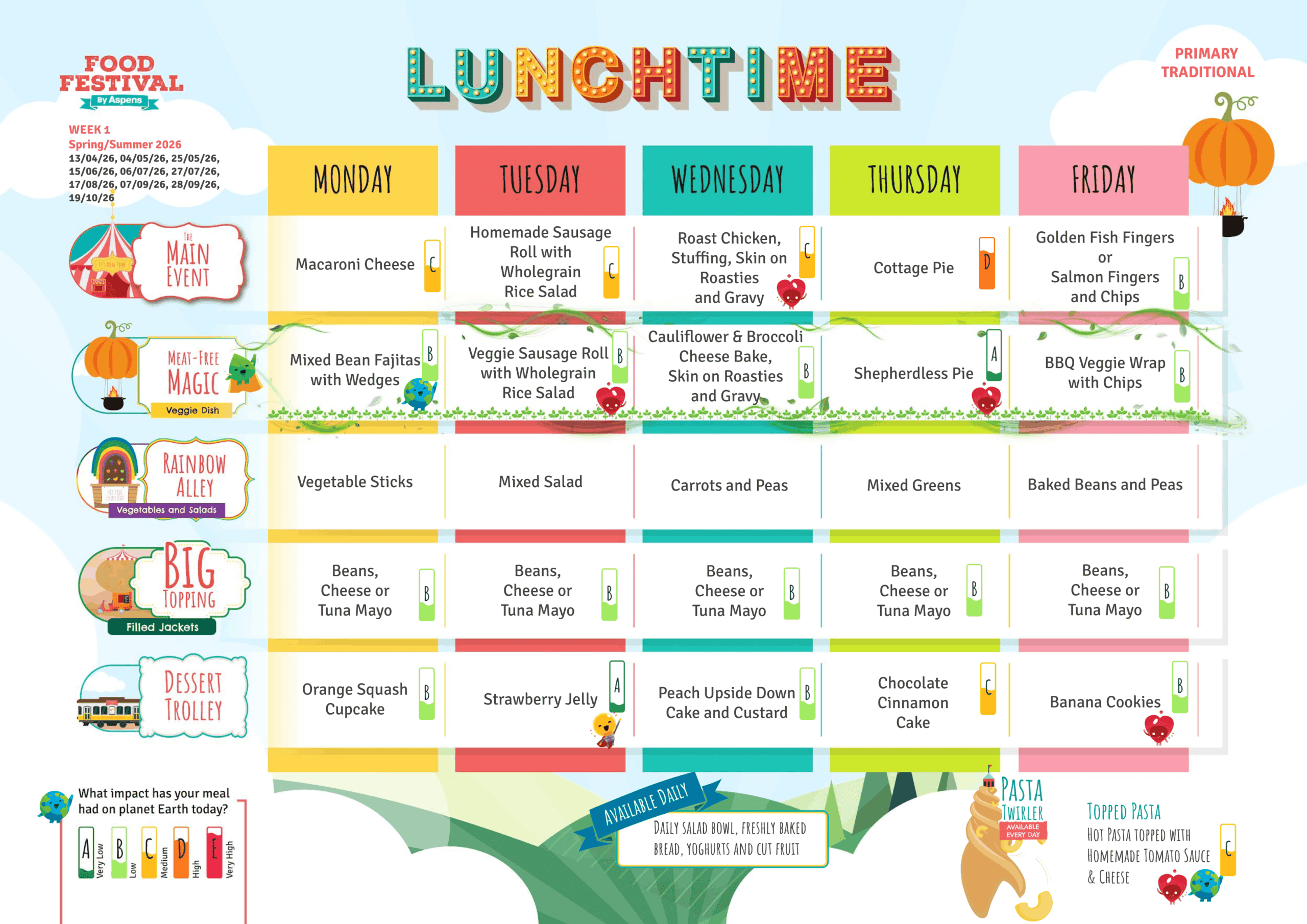
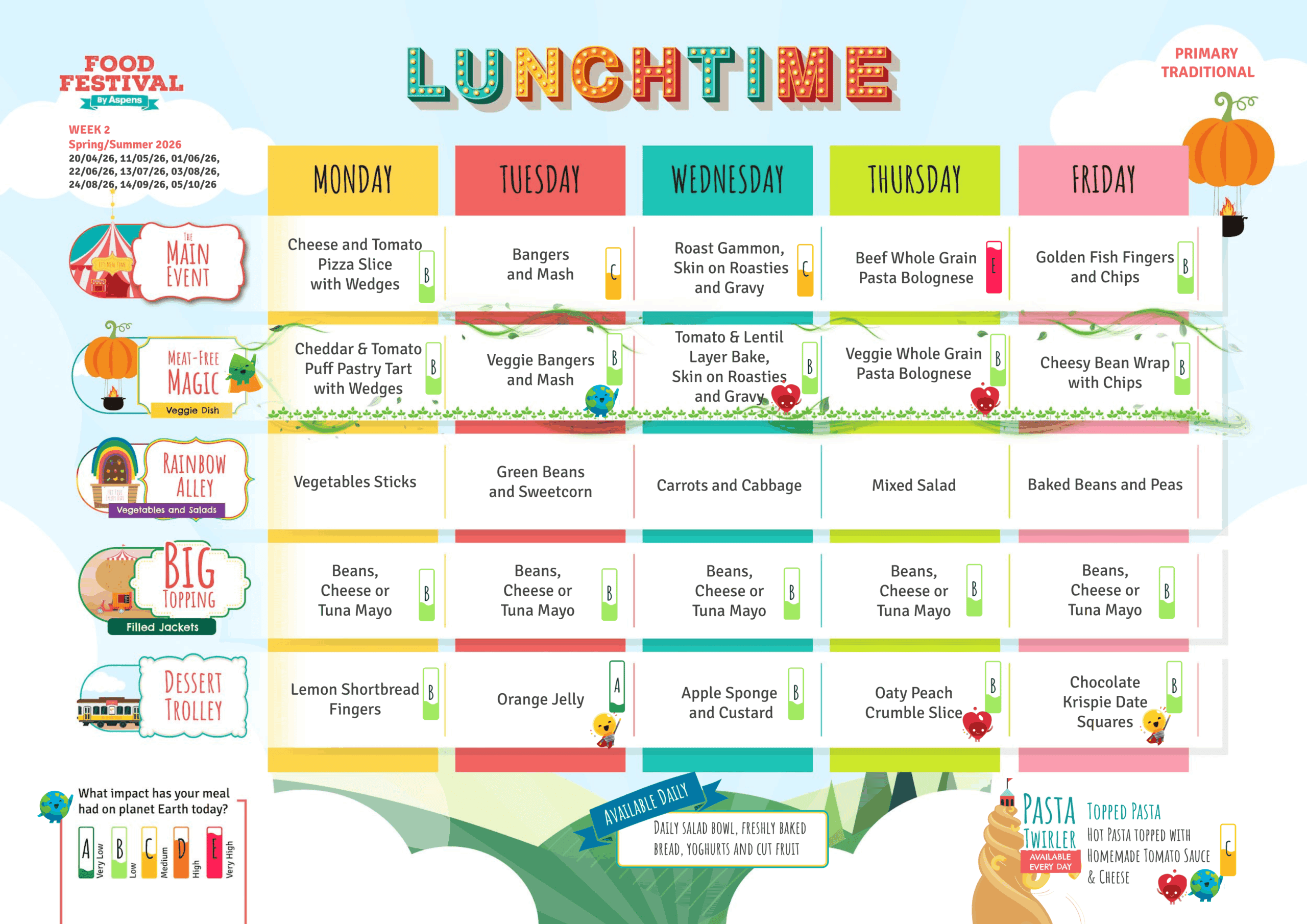
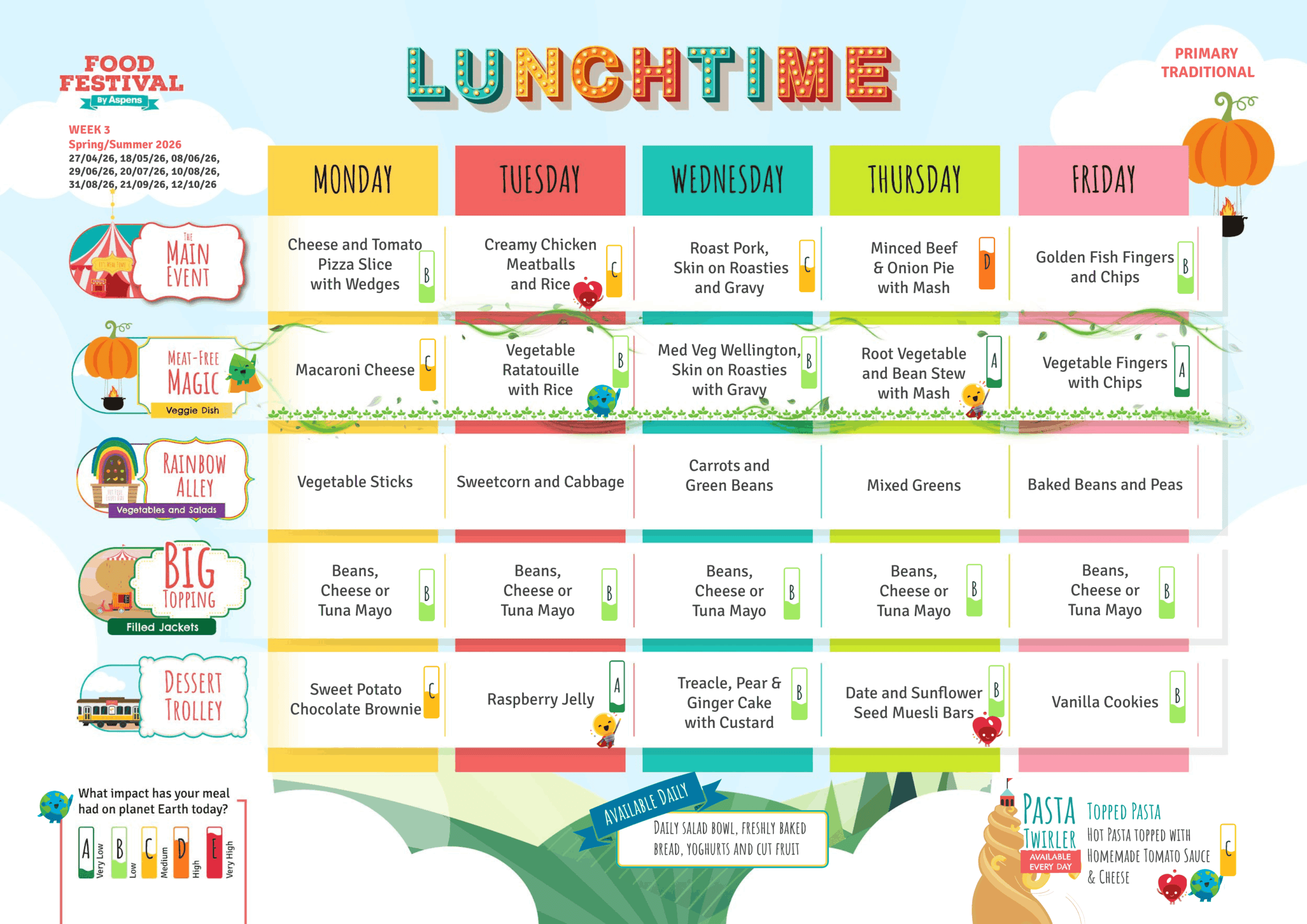
In every class, a lunch register is taken each morning and the children need to tell their teacher if they are having a hot lunch. Free hot lunches are available for all children in Years R, 1 and 2 and payments will be requested via MyChildAtSchool (MCAS) for children in Years 3, 4, 5 and 6. More information about hot lunches is available from the school office.
If your child has a packed lunch, we encourage you to make this as healthy as possible. Please note that under no circumstances should your child bring nuts in any form to school (e.g. peanut butter or Nutella sandwiches, in cakes or in cereal bars).
At Swinford we use Class Dojo, an online platform which allows us to send posts, letter, photos and evidence of your child’s achievements to you. On joining Swinford, you will be given a link to activate Class Dojo where you then have your own account and be able to contact your child’s class teacher and members of the Senior Leadership team.
As part of Class Dojo, you can also monitor your child’s rewards and sanctions which will come as an email to your account if they are given.
If you have an urgent message please contact the office. This is particularly important with messages about drop-off and pick-up.
All schools within Embrace Multi Academy Trust are committed to working in close partnership with all members of their community. All schools place great value on the role which parents and carers can play in supporting children’s learning. Members of staff and governors actively encourage a positive relationship between the school and the families of children who attend the school.
If you have any queries or concerns, we aim to resolve them as quickly as possible through day-today communication between parents and staff. It is always good to speak to the class teacher in the first instance.
For more information about our complaints policy, please see here.
School Nurse
Public Health (School) Nurses from Healthy Together are available to help you and your child in many different ways. You can find help and support here.
ChatHealth
ChatHealth is a confidential text messaging service provided by Healthy Together that enables parents and carers to contact their Public Health (School) Nursing team for advice and support. You can get in touch for advice and guidance about any aspect of your child’s physical or emotional health.
You can text a Public Health (School) Nurse on 07520 615 382
The service operates between 9am and 5pm Monday to Friday, excluding bank holidays. The team aim to reply to you within one working day and you should get an immediate message back to confirm your message has been received. If you need help before you hear back, you should visit your local walk-in centre, GP or call 111. In an emergency, call 999.
Medication
Parents/carers have prime responsibility for their child’s health and are responsible for ensuring their child is well enough to attend school. See here NHS guidance for more information.
Generally, school staff can only administer prescription medication. It may be necessary for the parent to pop into school to administer any non-prescription medication or give the medication before or after school.
In ordinary times, children should not attend school for at least 24 hours after the end of any episodes of sickness, diarrhoea, or fever and for at least 48 hours if we advise that there is an epidemic.
Where possible, parents/carers should ask doctors to prescribe medication in dose frequencies which can be taken outside of school hours. Medication should only be taken in school when absolutely essential. It is a parent’s/carer’s responsibility to ensure medication is in a suitable container, dated and labelled with their child’s name, and come into the school office to fill in the necessary permission form.
Where possible all medical and dental appointments should be booked outside of the school day so that learning is not impacted.
First aid
The school’s appointed person is Mrs Wetton. The vast majority of our teachers and learning support assistants are trained to administer emergency first aid. The appointed member of staff will assess each situation and take appropriate steps. In the event of a serious accident or illness, an ambulance will be called.
The law requires parents and carers to make sure that their child of compulsory school age receives a full-time education that meets their needs, either by attending school or through alternative education arrangements.
The school day is packed with lots of learning opportunities for your child and therefore it is important that all children arrive at school at 8:45am, so that they can begin their lesson promptly. Late arrival causes disruption for the class and can also affect a child’s confidence as they try to catch up. Our policy for attendance can be found within the policies section of our website.
There is a great deal of research available which clearly shows that even low levels of absence have a negative impact on achievement and attainment. Therefore, any non-urgent appointments should, whenever possible, be made out of school hours.
If you know about an absence in advance, a pupil absence form should be completed and returned to the office. For an unforeseen absence, please telephone or email the school before 9:00am to report the absence.
Requests for holiday leave
We are unable to grant any leave of absence for family holidays, unless there are exceptional circumstances which support the request being made. There are 190 days in a school year. That leaves 175 non term days for appointments, holidays and celebrations.
Term time absences may result in a fine.
Where a family chooses to take a holiday during term time, the absences will be coded as unauthorised, and as such Headteachers may request that the Local Authority issues a Penalty Notice. Our attendance policy can be found here.
With the introduction of the new national framework for penalty notices, changes came into force on 19th August 2024 and a copy of Leicestershire County Council’s notes for parents is available here.
Unauthorised absence
Without a form or note, any absence cannot be authorised and must go down on a child’s record as unauthorised absence. Attendance records form part of the annual report which goes home to parents. If you have any concerns or queries regarding your child’s attendance, please do not hesitate to contact the school. We have a network of support in place for those who require it.
Overviews of what the children in each class will be learning will be sent home along with class newsletters at the beginning of each term. These overviews and more detailed information can be found within the curriculum section of our website.
Assessment in Year 1 – 6
The government has permitted individual schools to adopt whatever assessment system suits them best and we currently use our own assessing without levels system and the Headstart tests to allow us to monitor pupil progress through the year. We believe this is an efficient way to track pupils’ understanding of curriculum objectives and easily identify what each pupil can and cannot do. Essentially, this system tracks the learner, so planning and teaching can be targeted for individual pupils’ needs.
Every child’s progress is checked by comparing their current attainment with their prior attainment for every subject. When considering expected rates of progress, it is important to remember that children develop at different rates and in different ways. There will always be children who are performing below and beyond the levels which might be considered to be expected for their age. What is important is that your child is making good progress whatever their starting point.
A full report including personal comments about your child and covering all subjects will be published towards the end of the summer term. If you have a child in Year 6, you will receive a separate letter at the end of the summer term reporting their individual end of Key Stage Standard Attainment Test (SATs) results.
Details of our curriculum can also be found on our website.
Assessment in EYFS / Year R
Parents/carers of children in EYFS have their own unique password for an online journal known as Tapestry; this provides a unique insight into how their children are progressing and facilitates a quick and easy sharing of information between home and school. Children in EYFS are continually assessed against seventeen areas of learning to determine whether their development is typical for their age. The Reception baseline (RBA) is completed in the first 6 weeks of any child entering school – information can be found here.
A copy of the latest EYFS framework can be found here.
Assessment for Year 6 / Standard Attainment Tests (SATs)
In May 2025, children who have reached the end of Key Stage 2 (KS2) will sit Standard Attainment Tests (SATs) in: reading; grammar, punctuation and spelling; and maths.
The reading test will be a single paper with questions based on three passages of text. Your child will have one hour, including reading time, to complete the test, which will consist of a wide variety of question types.
The grammar, punctuation and spelling test will consist of two parts – a grammar and punctuation paper requiring short answers and a spelling test. Children will sit three papers in maths – one arithmetic paper and two papers centred on mathematical reasoning.
These tests will be both set and marked externally, and the results will be used to measure the school’s performance (for example, through reporting to Ofsted and published league tables). Children will be given a standardised score, with a score of 100 representing the national expected standard. Your 12 child’s marks will be used in conjunction with teacher assessment to give a broader picture of their attainment.
Standard External Tests
In June of Year 1, all pupils take the Phonics Screening Check. This test is out of 40, and the past mark for a number of years has been 32. The results will be shared with parents. More information about the screening can be found here.
Multiplication Check
All pupils in Year 4 will complete an online multiplication check. The results will be shared with parents. More information about this can be found here.
Presentation Standards
Our latest presentation and handwriting policy can be found here.
Marking and Feedback
Our latest marking and feedback policy can be found here.
Phonics is a way of teaching children to read quickly and skilfully. They are taught how to:
- recognise the sounds that each individual letter makes;
- identify the sounds that different combinations of letters make – such as ‘sh’ or ‘oo’
- blend these sounds together from left to right to make a word.
Children can then use this knowledge to ‘de-code’ new words that they hear or see. This is the first important step in learning to read.
Research shows that when phonics is taught in a structured way – starting with the easiest sounds and progressing through to the most complex – it is the most effective way of teaching young children to read. It is particularly helpful for children aged 5 to 7. At Swinford School, we use Little Wandle.
To make payments (e.g. for lunches, trips and after-school clubs), you should use the MyChildAtSchool (MCAS) portal; please contact the school office if you are unsure how to do this.
Each child will be issued with a Home-School Record which needs to be brought to school each day. The vast majority of letters from school, will be sent via email but sometimes a paper copy will be sent home. The MyChildAtSchool (MCAS) parent/carer portal will give you information about your child’s current attainment and achievements. If you wish to communicate with us via email, please only use our admin email address, so that these can be actioned as soon as possible.
- Teachers or support staff will escort the children to the lower playground, where they will be handed over to their parents/nominated collectors.
- Please exit the school grounds via the gate on The Close as the pavement makes it much safer.
- Unless we have received prior instruction to allow children to walk home by themselves, children will need to wait with a member of school staff if their nominated collector is not there.
- Children using the school taxi will be supervised and escorted by a member of school staff.
- Children attending after-school clubs will register with the leading adults in the agreed spaces.
Please note that parents and carers should not be driving up School Lane or parking in the car park unless there are exceptional circumstances. If there are exceptional circumstances, please inform the school office. We do have two disabled parking spaces and if you need to make use of these, please let us know.
Please be considerate when parking in the village. The Village hall car park has lots of spaces for you to park and is only a short distance away. Please do not block driveways and access points to show consideration to those living in the village.
Every child is affiliated to one of four house teams. Our houses are named after the four Patron Saints of the United Kingdom: St George; St Patrick; St Andrew; and St David. There are a wide range of opportunities for all children to participate in a variety of competitions for their house team and play a part in contributing to their team’s success. Good behaviour, acts of kindness and participation in a wide variety of activities, are rewarded with house points (plastic coloured tokens which the children post into collection jars) and the team with the most points at the end of each year is awarded the house trophy.
Our house system provides the children with many opportunities to work as part of a team towards a common goal and feel a sense of belonging within their house team. They learn to co-operate and communicate and how to win and lose with dignity, whilst maintaining a healthy level of competitiveness.